Your Cart
Total:
£0.00
 Sydelle
Table of Contents

Content Strategist


Target URLs are the pages on your website that you want search engines to prioritise, and anchor texts are the words or phrases that link to these pages. When it comes to SEO, choosing the right target URLs and anchor texts is essential for improving your site’s rankings, driving organic traffic and increasing conversions. However, it’s not enough to just focus on the target pages or the anchor texts themselves; both must work in tandem to enhance your site’s authority and relevance.
In this guide, we’ll walk you through the step-by-step process of selecting the most valuable target URLs, choosing the right anchor texts, and building a balanced link profile that supports your SEO goals.
Selecting your target URL requires you to first identify your MVP. A website traditionally has: a home page, an about us page, a services page, a blog/ insights/ news page and contact us page. You can use any of these pages as your MVPs which will further help you determine the direction of your SEO, Content and Link Building plan.
MVPs (Most Valuable Pages) are the pages on your website that offer the most value in terms of traffic, conversions and authority. These are the pages that directly support your business goals, whether it’s generating leads, sales or building brand authority. For example, service pages – cornerstone content and product pages are all likely candidates for MVPs.
Most companies build/ optimise their home pages to their MVP’s. If you need help with webpage building, contact the Jodana team for a personalised and comprehensive service.
To identify your MVPs, you can use tools like Google Analytics, Ahrefs or Semrush to analyse your website’s performance. Look for pages with high traffic, strong user engagement (low bounce rate + high time-on-page) and high conversion rates. These are the pages that should be prioritised for link-building.
The short answer is: it depends on your goal. Different pages fulfill different SEO goals and you should select the MVP that aligns with these goals.
Selecting the right web page will ensure you are driving traffic to the MVPs that align the most with your business objectives. For instance, if your goal is to increase sales, focus on linking to product or service pages.
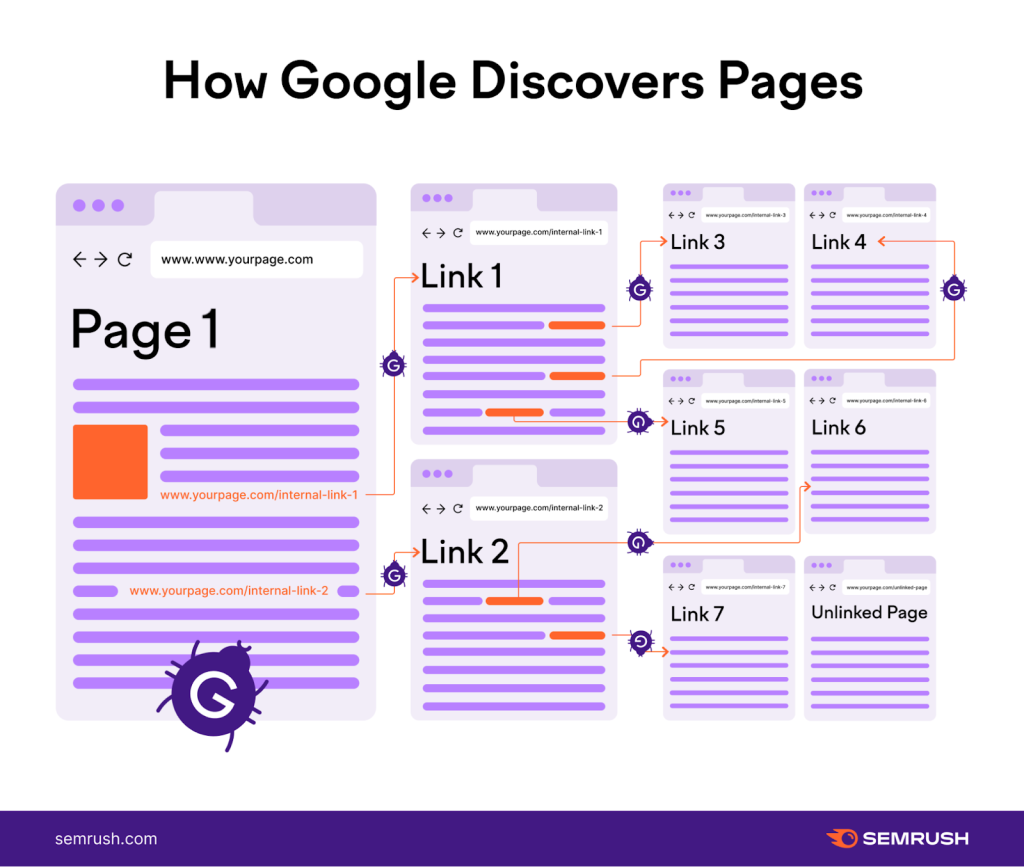
Source: https://www.semrush.com/blog/website-structure/
Once you’ve identified your MVPs, the next step is to choose which target URLs to focus on. A good URL is one that offers high traffic, high conversion, and high authority.
A Uniform Resource Locator (URL) is the address you enter on the web to access a particular page. A website will have multiple URLs organised by categories and sub categories to make navigation easier for the user. Search engines like Google use these URLs to determine relevance to keywords which will influence its position in search results.
A target URL (e.g. https://www.jodana.co.uk/)is the link you want people to click on when they find your page through Search Engine Results Pages (SERPs). In SEO, target URLs are the destinations you want users to land on when they click a link from a blog, article, search result or an SEO ad campaign.
Search engines like Google use URLs to understand the content of your pages. Having a clean, descriptive and keyword-rich URL structure helps search engines and users quickly identify what the page is about.
Example 1:
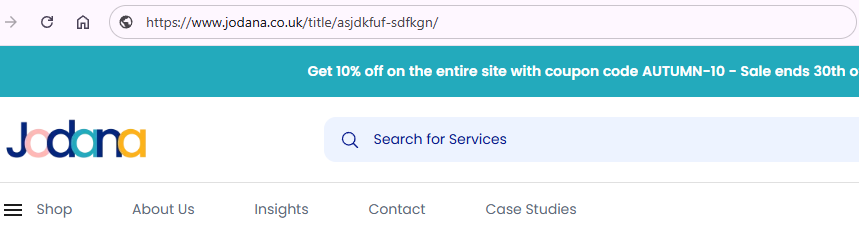
Example 2:
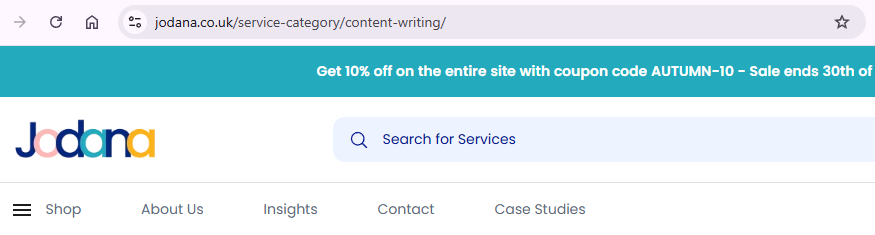
As you’ll see in example 1, it’s unclear which page the user has been targeted to. However in example 2, the user has been targeted to the content writing service of the Jodana website. URLs that are easy to read, short and relevant to the search intent can lead to better rankings.
Yes, you can. Service and landing pages are great for building backlinks and pillar pages for providing information.
Each page type plays a different role in your SEO strategy: pillar content builds your authority, service pages improve rankings for specific keywords and landing pages help convert visitors into customers.
Once you’ve identified your MVP, pick target URLs that satisfy the Trifecta of success: high traffic, high conversion, and high authority. By targeting backlinks to these pages, you can boost both your site’s visibility and its ability to generate conversions.
Before you start adding new backlinks, it’s important to understand where you currently stand. Use tools like Ahrefs, SEMrush, or Google Analytics to analyse your website’s backlink profile.
Look at the anchor texts being used and see which pages are receiving the most backlinks. This will help you understand which of your target URLs are already benefiting from anchor text links and which ones need more attention.
You can also use tools to analyse your competitors’ backlink profiles, spotting opportunities where you might be able to build links for your own site.
Having the right balance of anchor text types is key to keeping your SEO strategy natural and effective. Google rewards a diverse and balanced anchor text profile, so avoid using the same type of anchor text for every link.
For your homepage, it’s best to focus on branded and naked URL anchors (e.g., “Jodana” or “jodana.co.uk”). These help build your site’s authority without focusing too much on specific keywords.
For service pages or product pages, you can use a mix of blended (e.g., “Jodana SEO services”) and exact match (e.g., “SEO audit services”) anchors. Just be cautious with exact match keywords – using them too frequently may seem unnatural to Google.
By defining your anchor text ratios, you ensure that your link profile is both natural and optimised for SEO.
Not all anchor texts are created equal, and they each play a different role in your SEO strategy. The four main types of anchor texts are:
Each type of anchor text should be used appropriately depending on the target URL. Branded and naked anchors are great for building your homepage’s authority, while partial match and exact match anchors are more suitable for service or product pages.
Your homepage plays a critical role in building your site’s authority. For this reason, it’s best to focus on branded and naked URL anchors for your homepage links. This helps establish trust and recognisability without overwhelming your homepage with keyword-rich anchors.
This strategy helps maintain a natural flow and supports the overall goal of building your site’s authority.
For inner pages, such as service or product pages, the focus should be on driving relevance and conversions.
Your goal with inner pages is to build authority and drive conversions, so be sure to keep the balance between natural language and keyword relevance.
When creating your anchor text strategy, always keep in mind that the anchor texts should fit naturally within the content. If the anchor text feels forced or awkward, it could be flagged by Google as a manipulative tactic.
For instance, instead of using an awkward anchor like “click here for SEO audit services,” try something like “Learn more about our SEO audit services”. This feels more natural to readers and search engines alike.
SEO is an ongoing process, so be sure to regularly review your anchor text strategy to ensure that it remains effective.
Use tools like SEMrush or Ahrefs to track the performance of your backlinks and anchor texts. Keep an eye on the diversity of anchor text types and adjust your strategy based on the results.
Over time, you’ll want to refine your approach to ensure that your anchor text remains relevant and natural while continuing to support your target URLs.
If you’d like expert advice on refining your anchor text and backlink strategy, reach out to the Jodana team today. You can also check out our insight on why auditing your site is important to understand the key steps for optimising your SEO.
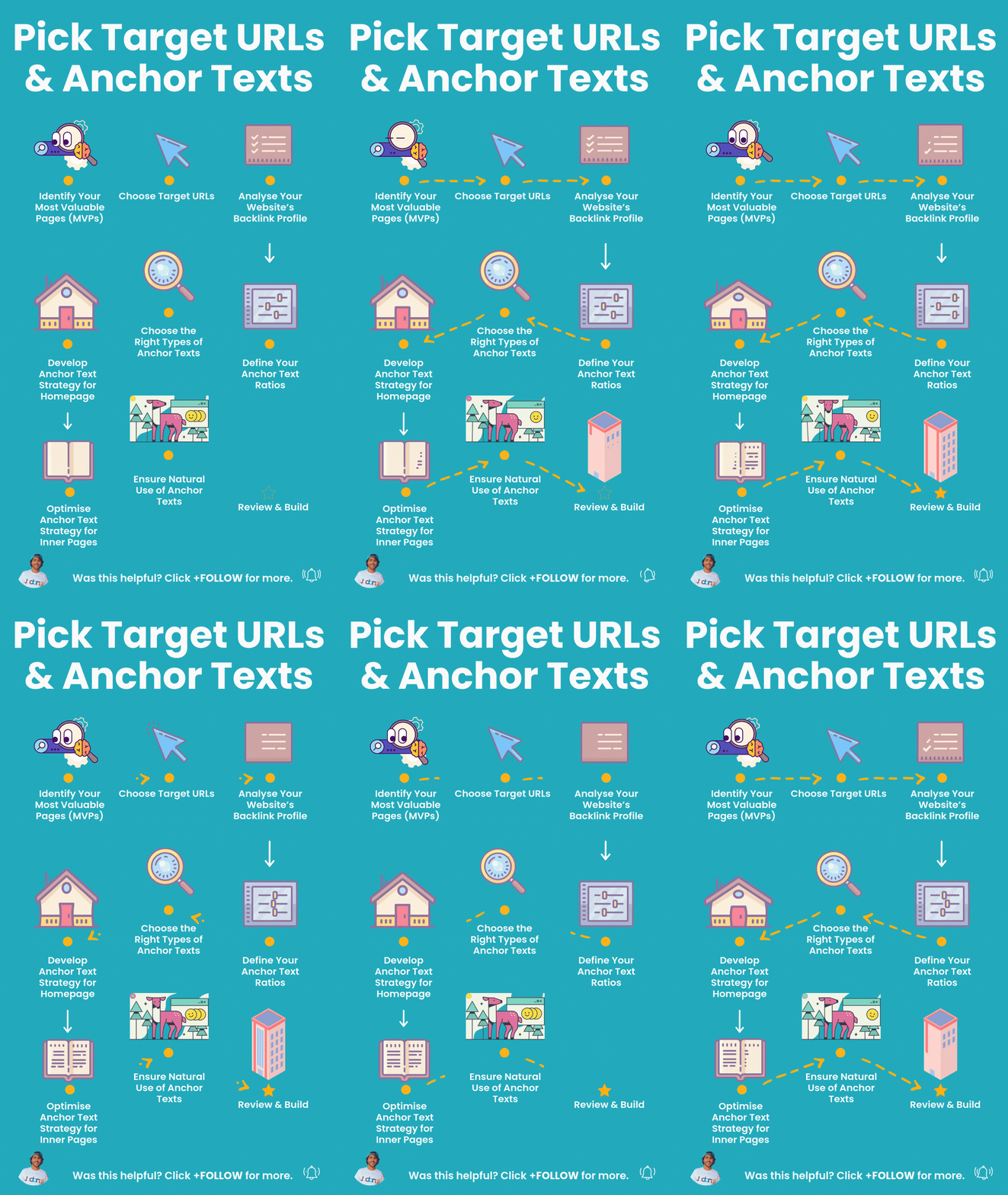
Choosing the right target URLs and anchor texts is essential for boosting your website’s SEO performance. By carefully selecting your MVPs, defining your anchor text ratios, and ensuring that your anchor texts flow naturally, you’ll build a link profile that improves your site’s authority, relevance, and conversions. If you need assistance with URL optimisation or link-building strategies, our SEO experts are here to help. Contact us today to start optimising your site for maximum SEO performance.